Loading image...

 © InterContinental Yokohama Pier 8
 You have been browsing fireplace photos for a week. Half of them sit on bare walls with no flue pipe in sight, the flame floating above what looks like a polished trough of liquid. There is no smoke, no chimney, no stonework. The room is modern. The fire is real. And somewhere underneath the visuals is a fuel you have probably never bought before.
That kind of fire has a name. It is an ethanol fireplace, and the reason the chimney has gone missing is that the fuel has changed. Instead of cordwood or piped gas, the burner inside is running on bioethanol, a liquid made from fermented plant sugars. Once you understand what is happening inside that burner, every other question a first-time buyer asks, from heat output to safety to whether you can put one outdoors, becomes a lot easier to answer.
We have been making ethanol burners and the fireplaces they sit inside for more than two decades. The guide below is the one we wish every new buyer had on the first day of their research. It is grounded in what our own products are certified to do, what the relevant safety standards actually require, and where the trade-offs sit between one model and another.
Loading image...
© InterContinental Yokohama Pier 8 An ethanol fireplace is a ventless real-flame fireplace fuelled by liquid bioethanol. It produces a clean flame without a chimney, flue, or gas line, which means it can be specified almost anywhere a designer or homeowner wants a focal-point fire.
The category is sometimes called a bioethanol fireplace, a clean-burning fireplace, or a flueless fireplace. All three names describe the same thing. The burner sits inside a housing made of steel, stainless steel, or a fire-rated composite, and the fuel is decanted directly into the burner before it is lit. There is no firewood, no kindling, no gas connection. The complete combustion of high-purity bioethanol releases only heat, water vapour, and carbon dioxide, which is why the product does not need a flue.
That single shift, from solid fuel and piped gas to a self-contained liquid burner, is the reason an ethanol fireplace can land in places a traditional fireplace cannot. A wall in an apartment that backs onto another apartment. A kitchen island. A freestanding sculptural piece in the middle of a living room. An outdoor cabana with a roof too low for a chimney.
The fuel sits in a sealed reservoir inside the burner. When you light the surface of the liquid, the ethanol vapourises and meets ambient oxygen above the burner pan, sustaining a flame for as long as the fuel lasts. The combustion is clean, which is why no flue is needed to extract emissions away from the room.
There is a useful detail that often gets skipped. The flame is not consuming the liquid directly. What actually happens is that the heat above the burner pan vapourises a thin layer of ethanol at the surface, and that vapour mixes with air to combust. The pan acts as a controlled evaporator, and a well-designed burner regulates how quickly that vapour is produced. That is why two fireplaces using the same fuel can behave very differently. The pan geometry, the air-fuel contact surface, and the way the burner is shielded from drafts all change the flame quality, the burn rate, and the emissions profile.
A 2016 study published in Building and Environment by Nozza and colleagues tested five flueless fireplaces in a ventilated chamber and concluded that burner design, specifically the air-fuel contact surface, is the most relevant variable affecting odour emissions. The takeaway for a first-time buyer is direct. A budget burner with a poorly designed pan and a certified burner from a manufacturer that engineers its own combustion are not the same product, even if they look similar in a showroom.
Ethanol fireplaces come in two ignition styles. A manual burner is lit by hand using a long lighter, and the flame is adjusted by sliding or rotating a damper on the burner. An automatic or electronic burner is lit by pressing a button. Sensors monitor flame condition, ambient temperature, and combustion conditions inside the housing, and the unit will shut itself down if any of those drift outside the safe operating envelope. Both styles are common across the modern ethanol fireplaces collection. The right choice depends on how often the fireplace will be used and whether you want the convenience of remote ignition.
Loading image...


The fuel is liquid bioethanol, sometimes labelled as denatured alcohol or fireplace fuel. Quality matters more than buyers initially realise. According to our sister brand e-NRG Bioethanol, bioethanol below 96 percent purity burns incompletely, leaving heavier alcohols unburned, which produces a sharp chemical odour and l soot on the burner. Fuel above 97 percent purity evaporates too quickly, which makes combustion aggressive and unstable. The sweet spot for clean residential combustion is the 96 to 97 percent purity band.
If you read one technical sentence about the fuel before you buy, make it that one. The single most common cause of unpleasant smell, soot, and flame instability in ethanol fireplaces is sub-grade fuel, not the product itself.
Ethanol fireplaces produce supplementary heat, typically in the range of around 6,800 BTU/hr (2 kW) for a compact tabletop model up to around 44,400 BTU/hr (13 kW) for a large architectural unit. That puts most residential units comfortably inside the supplementary-heating bracket, capable of warming a 25 to 60 square metre living space depending on burner size, room volume, and how well the space is insulated.
The UK National Energy Foundation describes a typical residential bioethanol fire at around 6,800 BTU/hr (2 kW) as comparable to a two-bar electric fire or fan heater, which is a useful mental benchmark. Larger architectural installations comfortably exceed that figure, but the category is not designed to replace a heat pump or a ducted gas system. It is designed to take the chill off a living room and to give a space a warm focal point in winter.
Heat output in our range comes from the burner, not the housing the burner sits in. Smaller burners such as the AB3, used across the compact end of our ethanol fires range, deliver lower output and longer burn times suited to atmosphere-led use. Larger burners such as the XL1200, used in the wider architectural end of the same range, deliver substantially more heat across a longer flame, suited to open-plan living spaces where the fire is doing some real warmth work alongside its visual job.
The other variable is room volume. A fireplace will feel warm in a smaller room and atmospheric in a larger one with the same burner. The National Energy Foundation notes that rooms under roughly 40 cubic metres are unlikely to be suitable for an ethanol fire of any meaningful output, because there is not enough air volume to support clean combustion comfortably. Our installation guidelines line up with that figure and add a more precise volumetric calculation, which we cover in the safety section below.
Loading image...
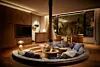
 © FUFU Kyu-Karuizawa, Restful Forest
 Yes, when the product is properly certified, correctly installed, and run on the right fuel. The category requires care in the same way a gas hob requires care, and the engineering controls that make it safe are mature and well-documented.
There are three things a first-time buyer should look for. First, a recognised safety certification on the burner and the appliance. Second, a fuel that meets the purity band described above. Third, a room with enough air volume for the burner output, which is a calculation the supplier should be able to do for you on request.
The three credentials worth knowing are UL 1370, EN 16647, and the Australian mandatory standard administered by the ACCC. Every fireplace in our ethanol fireplaces collection is certified to UL 1370 in North America, EN 16647 in Europe and the United Kingdom, and is compliant with ACCC recommendations in Australia. That triple-credential coverage is unusual in the category and is the reason our products specify into hospitality, residential, and commercial projects on three continents. It is also one of the reasons more than 250,000 installations across 75 countries have specified the same product range, from residential apartments to hotel lobbies.
UL 1370 is the American safety standard for decorative alcohol-burning appliances, governing burner stability, fuel containment, and surface temperature. EN 16647 is the European combustion and emissions standard for bioethanol fireplaces, with stability testing, fuel-container requirements, and labelling rules. The ACCC framework in Australia is set under the Consumer Goods (Decorative Alcohol Fuelled Devices) Safety Standard 2017, and it incorporates elements of EN 16647 along with mandatory fuel-container requirements, including a flame arrester or an automatic fuel-pump system. We design and engineer to those three standards from the burner up, which is why the same product can be specified into a Sydney penthouse, a Berlin restaurant, and a New York hotel without changes to the unit itself.
Loading image...
Bioethanol combustion releases water vapour and carbon dioxide. In a normally ventilated room this is comparable to the natural CO2 load from a few extra people in the same space, and it disperses without intervention. In a tightly sealed room with minimal air movement, those combustion products accumulate, which is the scenario that has caused the indoor air quality concerns surfaced in recent academic literature. A 2026 study in the Journal of Hazardous Materials tested bioethanol burners under deliberately minimal ventilation and found increases in nitrogen oxides, formaldehyde, and acetaldehyde above background levels. The authors explicitly call for adequate ventilation, improved fuel formulations, and performance standards as the mitigations, which is exactly what the certified product category delivers when installed and used as designed.
The practical rule of thumb our team uses is around 5.7 cubic metres of room air per 1,000 BTU/hr of burner output. If the room is smaller than that calculation suggests, opening a window even 25 millimetres or leaving a door to an adjacent room open is enough to restore the volume. It is a low-effort step that takes the academic concern off the table.
Never refill a burner that is still warm or showing any flame. Ethanol flames can be hard to see in bright light, which is the single biggest cause of safety incidents reported by the ACCC. Wait for the burner to cool completely. Use the manufacturer's supplied jerry can or refilling tool, not a household funnel. Keep a fire blanket or a powder extinguisher accessible, not water. These are the same disciplines that apply to any liquid-fuel appliance, and they become second nature within a week of ownership.
Loading image...
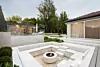

The category breaks into five practical types, each suited to a different installation context.
A freestanding ethanol fireplace is a self-contained unit that sits on the floor without any wall attachment. It is the easiest format to install because it requires no construction work at all. Freestanding and portable models in the wider ethanol fireplaces collection are typically used as movable focal points that can travel between rooms or come outside for entertaining.
A wall-mounted ethanol fireplace hangs on the wall like a flat-screen television and is the most common configuration in apartments. There is no flue penetration and no structural work, so installation is usually a single afternoon.
A built-in ethanol fireplace, sometimes called a recessed or insert model, sits inside a purpose-built cavity. This is the category most often used by architects and interior designers because the burner becomes part of the architecture rather than an appliance bolted to it. Our Flex, Bay, and Frame series are designed for exactly this kind of installation, with sealed fireboxes that integrate into walls, columns, and feature joinery.
A fireplace insert retrofits an existing wood-burning or gas fireplace, converting the old opening into a flueless ethanol fire. This is a quiet but useful path for a renovation buyer who already has a brick fireplace they no longer use.
A tabletop ethanol fireplace is a compact, portable unit that sits on a coffee table, dining table, or outdoor entertaining table. These run on small burners and produce modest heat, but they deliver an enormous amount of atmosphere for the footprint.
Outdoor ethanol fireplaces deserve a separate mention because most beginner guides ignore them. Outdoor-rated models, which sit inside the broader ethanol fireplaces range, are engineered for wind exposure, weather, and the slightly different combustion conditions that an open space introduces. An outdoor model is not just an indoor model that has been moved outside; the burner shielding, the housing materials, and the flame geometry are tuned for a different environment.
Loading image...

You lose the chimney. No flue, no structural penetration, no soot, no annual sweep, no negotiation with a heritage overlay or a strata committee about where the chimney can go. That alone removes months from many renovation timelines, no chimney brief, no structural consent, no heritage-overlay negotiation.
You lose the smoke. Properly burned bioethanol releases heat, water vapour, and CO2, nothing else. Furniture and curtains do not absorb smoke. Walls do not yellow. Clothes do not smell.
You gain placement freedom. A wall, an island, a balcony, a courtyard, a hotel lobby, a feature joinery panel. Anywhere there is enough air volume and a non-combustible surround, an ethanol fireplace can sit there. We have customers who put one in a houseboat. That was not on our product brief; the fact it works there is a consequence of removing the flue from the equation.
You gain real flame. This matters more to first-time buyers than they expect. An electric fireplace is a flame projection; an ethanol fireplace is a real fire, with the heat shimmer above it, the soft crack of expanding metal, and the warm air rising. It is the thing every other "no smoke, no chimney" fire is approximating.
You gain a renewable fuel. Bioethanol is produced from fermented plant sugars, typically corn or sugarcane. Combustion is carbon neutral at the point of use, because the CO2 released is the same CO2 the crop absorbed during growth. Lifecycle emissions from fuel production exist, in the range of 0.19 to 2.08 kilograms of CO2 per litre depending on feedstock and processing, according to recent peer-reviewed research. Even on a full lifecycle basis, bioethanol comfortably outperforms petrol-derived alternatives, and second-generation fuels made from agricultural waste close the production-emission gap further.
You gain global compliance. The certifications carried across our range mean the same product can specify into a project anywhere we ship.
Loading image...

The day-to-day workflow is genuinely simple, which is part of the appeal.
Pour bioethanol into the burner using the manufacturer's supplied jerry can. Fill to the marked line, never above it.
Wait a few seconds for the fuel to settle in the burner reservoir.
Light the surface of the fuel with a long lighter, holding the lighter at the edge of the burner pan rather than directly above the fuel.
Adjust the damper to set the flame height you want. Lower flame for longer burn time, higher flame for more heat and visual presence.
When you are done, slide the damper closed to extinguish the flame. The burner cools within a few minutes.
A single fill of bioethanol typically burns for 4 to 8 hours depending on burner size and flame setting, with larger architectural burners running longer at lower flame heights and shorter at full output. Burners across the range carry the relevant safety certifications and use the same workflow above; the only meaningful difference between models is the size of the burner reservoir and therefore the time between refills.
Cleaning is light. Wipe the burner pan with a dry cloth between fills, every few weeks. Stainless steel housings can be polished with a non-abrasive cleaner. There is no ash, no soot, no creosote, and no chimney sweep on the calendar.
The buying decision comes down to five questions that sit in roughly the order our team works through with first-time buyers. The first two are about placement and volume, and they tend to resolve together. Where the fireplace is going, indoors or outdoors, freestanding or built-in, on a wall or on the floor, narrows the product range significantly, and the size of the space sets the ceiling on how much burner output the room can support. Multiply length by width by ceiling height, and check that the result is comfortably above the ventilation calculation for the burner you are considering. An outdoor courtyard wants a different unit than a sealed apartment living room, and a sealed apartment living room with a low ceiling wants a smaller burner than one with double-height volume.
The next two questions are about how the fireplace will actually be used. Heat output should match the warmth you want from the room, not the largest unit that physically fits the wall. A supplementary heater for atmosphere works at a different output than a fire that needs to take the edge off an open-plan living room on a winter evening, and the burner sizes across our range are tuned to that gradient. Ignition style is the other usage question. Manual burners are simpler and sit at the accessible end of the range; automatic e-Series burners add electronic ignition, remote control, flame sensors, and combustion monitoring inside the housing. For a fireplace that gets used several evenings a week, automatic ignition is worth the step up; for an occasional weekend fire, manual is perfectly adequate.
The fifth question is the surround, and it is where an ethanol fireplace stops being an appliance and starts being architecture. A wall-mounted unit sits on its own. A built-in unit lives inside joinery you commission. Our team works with architects and designers to specify housings, hearths, and surrounds that turn the burner into a piece of the room rather than a piece of equipment.
Compact wall-mounted and freestanding models for apartments and smaller footprints sit alongside outdoor-rated products in the same collection, designed for courtyards, alfresco areas, and hospitality projects, in the full ethanol fireplaces range.
Loading image...
A single litre of bioethanol typically burns for between 4 and 8 hours, depending on burner size and the flame height you choose. Smaller burners on a low setting run at the longer end of that range; larger burners running at full visual height run at the shorter end. Across a household that lights the fire a couple of evenings a week through winter, fuel consumption is modest.
Running cost varies meaningfully by region because bioethanol pricing differs across markets. In the United Kingdom, the National Energy Foundation reports bioethanol running cost roughly between a third and equal to the cost of equivalent electric heating, depending on the model and how it is used. In Australia and North America, the comparison is similar in shape but different in the exact ratio because retail fuel pricing differs. In every market we operate in, an ethanol fireplace is a comparatively affordable focal-point fire to run because there is no flue heat loss; close to all of the combustion energy stays in the room.
The genuine cost story sits less in the per-hour fuel figure and more in the comparison against the alternative. A built-in gas fireplace requires a gas line, a flue, structural penetrations, and a licensed installer. A wood fireplace requires the same plus a chimney sweep and an ongoing wood supply. An ethanol fireplace requires the unit, the fuel, and a small amount of light maintenance. The whole-of-ownership picture is the relevant comparison, not the litre price in isolation.
Yes, when the product is certified, installed correctly, and used with the right fuel in an adequately ventilated room. The relevant safety certifications are UL 1370 in North America, EN 16647 in Europe and the United Kingdom, and the ACCC mandatory standard in Australia. All of our ethanol fireplaces meet those three frameworks.
In normal operation, properly burned bioethanol produces carbon dioxide and water vapour, not carbon monoxide. CO can appear when combustion is starved of oxygen, which is why adequate room volume and ventilation are part of the safety envelope. Certified products designed and tested to UL 1370 and EN 16647 are engineered to combust completely under their specified operating conditions.
A properly designed burner running on 96 to 97 percent purity bioethanol produces no perceptible smell during operation. There is a brief odour at extinguish, when the last vapour above the burner pan finishes combusting, which is normal and dissipates within a minute. Persistent smell during operation usually means sub-grade fuel or a poorly designed burner; the fix is fuel of the right purity and a certified burner.
Yes, with the right product. Outdoor ethanol fireplaces are engineered for wind exposure, weather, and the open-air combustion environment, and the burner shielding and housing materials differ from indoor units. Using an indoor model outdoors is not recommended, and the reverse is also true; outdoor units are not always optimised for sealed indoor rooms.
Freestanding and tabletop models take minutes. Wall-mounted units typically install in a single afternoon. Built-in models depend on the joinery or wall construction they sit inside, and timelines align with the broader carpentry or build schedule rather than the fireplace itself. No model requires a flue, a gas line, or a chimney.
Bioethanol is a liquid fuel that combusts cleanly to heat, water vapour, and CO2. Gel fuel is a thickened alcohol-based fuel that burns less cleanly and is largely used in entry-level decorative units. The fireplaces we manufacture run on liquid bioethanol because the combustion is cleaner, the flame is steadier, and the safety certifications we hold are written for that fuel.
Loading image...

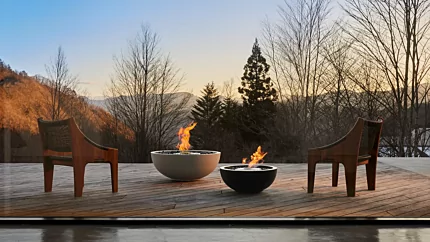
If the article so far has felt like a mounting list of yeses, the short answer is probably. An ethanol fireplace suits the buyer who wants a real flame and an architectural focal point without the construction overhead of a flued fire. It suits apartments and rentals where a chimney is not possible. It suits open-plan rooms where the fireplace is part of the architecture rather than tucked into a corner. It suits courtyards and outdoor entertaining spaces that would otherwise stay cold and empty after sundown.
It is less suited to buyers who need a primary heat source for a large, poorly insulated room, where a heat pump or a ducted system will do the heat lifting more efficiently. And it requires a small change in habit. You fill the burner. You light it carefully. You extinguish it before you leave the room. None of that is unusual, but it is different from a gas fire that you turn on with a switch and walk away from.
The category is also one of the few real-flame options that does not require a buyer to compromise on placement, sustainability, or design language. The fuel is renewable. The combustion is clean. The product can sit on a wall, in an island, on a tabletop, or in a courtyard. And when the burner inside has been engineered to UL 1370, EN 16647, and the ACCC framework, the safety questions that worried you on day one of the research have already been engineered out of the appliance you eventually buy.
That is the answer to the question this article opened with. An ethanol fireplace is a real fire freed from the chimney. Everything else, the choice of model, the choice of burner, the surround, the placement, follows from that one shift.