Loading image...
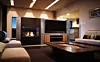

Ethanol Fireplaces
Create an instant talking point
Because bioethanol is clean-burning, EcoSmart Fire models do not need a chimney or a flue, or a utility connection – offering the ultimate in design simplicity and flexibility.
Whether you're creating a custom fireplace feature, renovating an existing fireplace, or looking for an out-of-the-box solution, we have an ethanol fireplace to suit your needs.
Ethanol Ranges


Loading image...


Environmentally-friendly
Fuelled by eco-friendly, readily available renewable energy – e-NRG bioethanol.
No flue, no chimney
Bioethanol is clean burning so you don't need to flue out any harmful emissions or install costly ventilation systems.
Loading image...
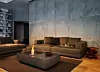

Architectural feature
Bioethanol’s lively dancing flame creates a striking focal point for interior designers.
Loading image...


Design versatility
Easily integrated into bespoke settings – from specially-made cabinetry, media units, walls, floating timber to stone benches and pillars.
The perfect fit
The streamlined design of the products synchronises effortlessly within award-winning architectural projects.
Loading image...

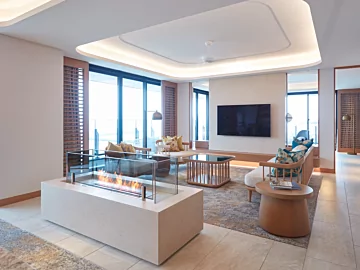 © InterContinental Yokohama Pier 8
 Loading image...
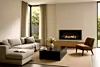

Ventless design
No venting required so ethanol fireplaces fit apartments, renovations, and compact spaces.
Supplemental heating
Add cozy zone warmth with modern fire features to complement your primary heating system.
Powered by e-NRG
Premium liquid fuel engineered for clean, consistent flames with low odour and zero smoke.
Related Collections
Learn More
Ethanol Fireplaces
Bioethanol Fireplaces
Ventless Fireplaces
FAQ's
How do ethanol fireplaces work?
Ethanol fireplaces work by burning bioethanol fuel, a clean-burning renewable alcohol made from fermenting plant sugars, in a self-contained, stainless-steel burner. When you ignite the fuel with a lighting rod, it combusts at the fuel surface, producing heat, water vapour, and minimal CO₂; there's no smoke, soot, or ash.
The real innovation is in flame stabilisation. EcoSmart Fire burners use physical regulators, including steel wool in compact models like the AB3 and baffle inserts in larger burners, to control fuel evaporation and distribute the flame evenly. This not only stabilises the flame but optimises fuel efficiency, extending burn times to 7–13 hours depending on burner size and capacity.
Shutting down is equally straightforward. A slider or hinge mechanism closes off oxygen, extinguishing the flame in seconds without any residual smoke or smell. Because combustion requires no flue, chimney, or gas line, ethanol fireplaces are truly ventless; the burner stays sealed until you're ready to refuel.
This combination of clean combustion chemistry and elegant mechanical control is what makes ethanol fireplaces such a flexible heating and ambience solution.
How much does it cost to run a ventless ethanol fireplace per hour?
Room-vented ethanol fireplace running costs depend on burner size and flame height, since combustion directly controls fuel consumption. Smaller burners consume around 0.31 litres per hour at minimum flame, mid-range around 0.5 L/h, and larger burners up to 1.1 L/h at full flame. At current bioethanol fuel pricing (typically USD $4-6 per litre retail), this translates to roughly $1.24-$6.60 per hour depending on the model and flame setting you choose.
The room-vented design gives you a real cost advantage: because there is no flue, 100 per cent of the combustion heat stays in the room. Every litre of fuel delivers its full thermal output directly into your space, with no heat loss up a chimney. This means lower fuel bills compared to traditional fireplaces at the same comfort level.
To minimise running costs, simply lower the flame height. Flame control is your cost control: it directly reduces consumption. For bulk fuel purchasing (200 litres or more), per-litre pricing drops significantly. Check e-nrg.com for current pricing and bulk rates.
Can I refill my bioethanol fireplace while it's running?
No, never refuel your EcoSmart Fire bioethanol fireplace while it's running or hot. Bioethanol requires careful handling: even if the flame isn't visible, a common occurrence in daylight, the burner remains dangerously hot and volatile vapours persist long after the flame appears extinguished. Contact with any ignition source at this stage can cause serious injury.
Always allow the fireplace to cool completely for at least 60 minutes after shutting off before refuelling. The cool-down is part of the rhythm of responsible ownership. When refuelling, use only the approved Safety Nozzle adapter or Jerry Can with Safety Spout, never pour directly from a bottle over or near the burner. If you spill fuel, remove all ignition sources, open windows and doors for ventilation, wipe the area dry, and wait until it's completely dry before relighting.
UL 1370-certified EcoSmart Fire bioethanol fireplaces are designed for safe indoor use when operated correctly. Pairing the correct cool-down protocol with e-NRG bioethanol fuel ensures consistent performance and safety.
How much does bioethanol fuel cost?
EcoSmart Fire bioethanol fireplaces run on e-NRG fuel, available
here
.
The actual cost per hour depends on your burner size and flame adjustment.
Consumption ranges from 0.31 litres per hour on compact burners to 1.1 litres per hour on larger models. Using a mid-size burner at full flame, an evening's three to four hours of operation costs approximately USD $10-15. If you adjust the flame to lower settings, consumption drops by 30-50%, extending burn time and reducing fuel costs proportionally. A 5-litre fill typically provides 7–14 hours of burn time, depending on your flame setting and burner size.
The appeal of bioethanol is predictable operational cost with no installation complexity. You’re not financing chimney construction, gas plumbing, or annual servicing. You’re buying fuel when you want to use the fireplace. Bioethanol’s 90-95% thermal efficiency means more of the fuel’s energy becomes usable heat, rather than escaping up a flue. Your actual running cost sits well below traditional fireplaces when you factor in the installation and maintenance savings.
For cost-conscious buyers, adjustable flame control is a practical tool. Lowering the flame doesn’t diminish the visual impact significantly, but it can cut your fuel consumption and cost by nearly half.
Can you cook on a bioethanol fireplace?
Bioethanol fireplaces are purpose-engineered as decorative appliances, delivering real, adjustable flame ambience without a chimney, gas line, or installation. They are not designed for cooking.
Their burners produce variable, dancing flames optimised for atmosphere, not the consistent, controlled heat that food preparation requires. The burner containers are designed to display flame elegantly, not for direct food contact. There are no temperature controls, cooking grates, or heat-resistant surfaces suited to cookware placement.
EcoSmart Fire bioethanol fireplaces are UL-listed as ventless decorative appliances, which is what they do best: transforming indoor and outdoor gathering spaces with real, clean flame that is immediate, zero-installation, and endlessly adaptable to any setting.
Are ethanol fireplaces legal in Australia? (AU)
Yes, ethanol fireplaces are legal in Australia when they meet the Consumer Goods (Decorative Alcohol Fuelled Devices) Safety Standard 2017, the country's mandatory product safety rule for clean-burning bioethanol fireplaces. Full-size models that satisfy the weight, footprint, and stability requirements are sold and installed lawfully across every Australian state and territory.
The 2017 standard, administered by the ACCC, sets minimum physical specifications and references EN 16647:2015 for performance and safety. It permits compliant freestanding, wall-mounted, and built-in bioethanol fireplaces. All EcoSmart Fire bioethanol fireplaces meet and exceed the mandatory minimum thresholds of 8 kg and 900 cm², and are independently tested to international standards recognised under the regulation.
Buy from a manufacturer that publishes its compliance documentation, and check that the model carries the Australian standard alongside its international certifications.
Are ventless ethanol fireplaces different from ventless gas fireplaces?
Bioethanol and gas ventless fireplaces differ fundamentally in combustion emissions, infrastructure requirements, and fuel delivery, making them suited to different priorities and spaces.
EcoSmart Fire bioethanol fireplaces are approved for both indoor and outdoor use. Their combustion produces only water vapour and minimal CO₂, with no smoke, soot, or toxic gases entering your living space. Gas ventless fireplaces, by contrast, release carbon monoxide and nitrogen dioxide indoors, which is why they're limited to outdoor use only. This emissions difference is the core distinction: bioethanol's clean burn supports indoor air quality; gas requires outdoor deployment.
Infrastructure-wise, bioethanol fireplaces need no gas line connection; you refuel manually from e-NRG bottles. Gas ventless models require a permanent liquefied petroleum or natural gas line, professional installation, and annual inspection and servicing. If your space has no existing gas infrastructure, bioethanol eliminates the cost and complexity of installation.
Maintenance also differs. Bioethanol requires cleaning after the first 50 litres of fuel burned and then periodically depending on usage. Gas units demand annual professional servicing and vent checks. Both achieve ~90% thermal efficiency, but bioethanol's user-managed refuelling and maintenance suit flexibility-conscious owners; gas suits those with existing supply and regular service budgets.
What gases and emissions does a bioethanol fireplace produce?
Bioethanol fireplace emissions are limited to heat, water vapour, and a small amount of carbon dioxide, with no carbon monoxide, smoke, soot, or ash produced during combustion. The CO2 released is roughly equivalent to two burning candles, which means correctly sized rooms maintain clean indoor air without a flue or chimney.
Clean combustion does depend on fuel purity. High-grade e-NRG bioethanol burns as a complete reaction, producing a steady orange flame from start to finish without the residues that lower-purity fuels leave behind. That's why EcoSmart Fire bioethanol fireplaces won't stain ceilings, dull nearby finishes, or leave ash to clean up between uses.
What the by-products look like in practice:
- Water vapour: a slight, imperceptible rise in humidity, not visible condensation in a correctly sized room
- Carbon dioxide: trace amounts, comparable to candlelight at the same output
- No particulates: no smoke, no soot, no ash, no odour
Ventilation is about keeping fresh oxygen available for combustion, not venting harmful gases. Each burner has a minimum room size, from the VB2 at 45 m3 [1,589 ft3] up to the AB8 at 116 m3 [4,097 ft3], so adequate air supply is a matter of considered installation
Do bioethanol fireplaces need a chimney or flue?
Bioethanol fireplaces with adjustable flame control do not require a chimney, flue, or permanent ventilation system. The clean combustion of bioethanol releases only water vapour and a small amount of carbon dioxide, with no smoke or soot that would need extraction through a dedicated exhaust pathway.
What replaces the chimney is adequate room volume and natural air infiltration. Minimum room sizes are specified per burner. In very compact rooms, a window openable to 25 mm [1 in] or an adjacent open door provides sufficient air exchange.
This chimney-free design underpins the installation freedom EcoSmart Fire bioethanol fireplaces are known for: zero-clearance inserts, freestanding pieces, and existing fireplace conversions all become viable without structural works.
How much heat does a bioethanol fireplace produce?
Bioethanol fireplace heat output from EcoSmart Fire ranges from around 2 kW (6,180 BTU/h) for a compact burner to 13 kW (45,870 BTU/h) for a large multi-burner configuration, with efficiency greater than 90%. Because these fireplaces are ventless, no heat escapes up a flue, so all thermal output stays in the room.
Output scales with burner size and room volume:
- Compact burners: 2 kW (6,180 BTU/h), suited to spaces from about 15 m2 [161 ft2]
- Mid-range burners: 3 to 4 kW (11,430 to 15,290 BTU/h), covering 40 to 65 m2 [431 to 700 ft2]
- Large multi-burner Flex layouts: up to 13 kW (45,870 BTU/h), covering up to 195 m2 [2,099 ft2]
Adjustable-flame models let you modulate the output below maximum, and a single fill delivers 7 to 14 hours of burn time depending on flame height. Configured to the space, an EcoSmart Fire fireplace adds immediate, ambient warmth as a sculptural focal point. Output varies with flame height setting and installation configuration.