Loading image...

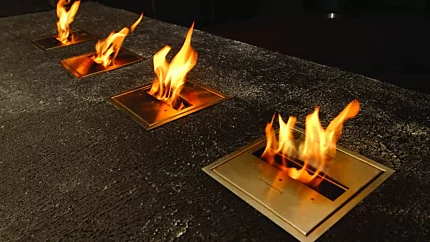
You bought an ethanol burner partly because there is no soot, no ash, no chimney sweep on the calendar. That promise holds, but it does not mean zero attention. Good ethanol burner maintenance is light work, and it is consumption-driven rather than calendar-driven, so most owners overthink it or skip it entirely. Both extremes shorten the life of the burner.
This guide is for owners and installers handling EcoSmart Fire burners, and it covers the few habits that genuinely matter: a clear cleaning interval, the right method for the right surface, component-by-component care for the flame regulator, refuelling discipline, and the troubleshooting tree for the small handful of issues that crop up in real homes.
Loading image...
EcoSmart Fire ethanol burners should be cleaned after approximately every 50 litres (13.2 gallons) of fuel consumed, or sooner if visible black residue appears around the burner opening. That interval is not arbitrary. Bioethanol burns cleanly enough that calendar-based cleaning leads owners to clean too often or, more commonly, not often enough, because they are guessing. Tying the trigger to fuel volume turns the question into a measurable habit linked to how much you actually use the fire.
Visible residue is the override. If a dark ring shows up at the burner opening before you have hit 50 litres, clean the burner immediately and check the fuel purity, because something has changed.
The 50-litre point arrives at different intervals depending on the burner. Below is a rough hours-to-50L reference for the certified range, based on each model’s stated burn time on a full tank.
Burner | Approximate hours to 50 litres |
|---|---|
AB3 | ~43 hours |
BK5 | ~27 hours |
XL500 | ~35 hours |
AB8 | ~19 hours |
XL700 | ~31 hours |
XL900 | ~27 hours |
XL1200 | ~25 hours |
The VB2 sits outside this table because of its different architecture; refer to the product manual for its interval. For a quick refresher on how to translate fuel volume to operating time, our FAQ on burn time on a full tank walks through the calculation for each model.
Loading image...
There are two approved cleaning methods for the AB and XL series. The first is the dishwasher, which catches most owners by surprise. Place the burner face-down on the top rack with the lid open, run a standard cycle, and the geometry takes care of itself. The second is the hand-wash: hot water, mild dish soap, thorough rinse. Both methods work; choose whichever fits the household routine.
Whichever method you use, the rule that outweighs both is complete drying before refuelling. Residual moisture dilutes the bioethanol, prevents ignition, and produces the “my burner won’t light” calls that almost always turn out to be a damp reservoir rather than a defect.
The full cleaning sequence is:
Allow the burner to cool fully and empty any remaining ethanol; flush the reservoir with water.
Wash by dishwasher or by hand.
Dry completely, inside and out, including under any removable component.
Refill to the maximum fill line with fresh e-NRG bioethanol at 96–97 percent purity.
A note on the VB2: internal components are described as dishwasher-proof, but because it sits outside the standard certification set, owners should follow the product documentation rather than apply the AB/XL routine by default.
Bioethanol leaves no carbon, so almost every visible mark on the outside of a burner is dust, fingerprints or environmental deposit rather than combustion residue. That means the right cleaner is usually mild, and the wrong cleaner is what damages the finish.
For the Grade 304 stainless steel body fitted to every burner in the range, the right routine is a soft brush to push debris inward, a vacuum pass to lift it off, then a wipe with a dedicated stainless steel cleaner along the grain. Finish with a protective stainless steel wipe. Never wipe across the grain, and never use chloride-containing cleaners (bleach or hydrochloric acid), which the British Stainless Steel Association notes cause pitting and staining on 304 grade.
The black ceramic coating, optional on the AB Series, XL Series and XS340 and standard on the VB2, is more fragile than it looks. Abrasive pads will scratch and chip it. Use a soft cloth and mild soap only.
Glass screens, including the Plasma Fire Screen and aftermarket surrounds, want an appropriate glass cleaner and nothing more. Metal scrapers are out of bounds.
A small but useful rule: test any new cleaning product on a hidden area of the burner first. The few minutes you spend doing that protect a finish that is meant to last the lifetime of the unit.
EcoSmart Fire’s flame regulators are user-serviceable on the XL Series and the AB8, and they need removal, separate cleaning, drying and correct repositioning at every cleaning interval. Skipping a component, or refitting one before it has dried, is the single most common cause of an uneven or unreliable flame on otherwise healthy hardware.
XL Baffles sit inside the XL500, XL700, XL900 and XL1200. Remove them from the burner before cleaning, wash separately, dry completely and reinsert in their original position. Partial cleaning gives you an uneven flame; partial drying stops the burner igniting.
The AB8 Efficiency Ring is a separate component that influences fuel consumption behaviour and flame shape. Clean it, dry it, and refit it correctly. A missing or misaligned ring is the usual explanation when an AB8 starts running hotter or shorter than it used to.
The BK5 flame slider controls flame height. Check the slider moves smoothly across its full range; trapped debris is the typical cause of stiffness. No lubricant is required.
The AB3 interior steel wool fill is a passive flame stabiliser. It is internal and not user-serviceable. Do not attempt to remove or replace it.
Top Trays, mandatory on all certified indoor models, should be inspected for warping from repeated heat cycling at each clean. Wipe out any fuel residue on the interior surface.
Think of these components as the working parts of the burner; the stainless steel body is just the housing.
Always wait at least 60 minutes after the flame is extinguished before refuelling an ethanol burner. The flame can remain difficult to see while the burner is still hot enough to ignite fresh fuel, and that is how the small minority of bioethanol incidents on record have happened. EcoSmart Fire’s safety manual is firm on the number, and the rule applies regardless of how short the burn was.
The fuel itself is the other half of the equation. Use e-NRG bioethanol at 96–97 percent purity only. Lower-purity fuels burn incompletely, deposit carbon visibly on stainless steel and glass, smell off, and can void warranty. Gel fuel is incompatible and will damage internal components, which is the short version of the longer answer in our FAQ on why gel fuel is incompatible.
Useful refuelling habits:
Do | Do not |
|---|---|
Wait the full 60 minutes after the flame goes out | Refuel a warm burner because the flame “looked out” |
Refill from the original e-NRG container or supplied Jerry Can | Decant fuel into red petrol containers or unmarked bottles |
Wipe spills with a dry cloth, then a damp cloth, then allow to dry | Light the burner with residual spilled fuel on the surface |
Confirm 1,500 mm (59.1 in) clearance to flammable items | Place soft furnishings, fabrics or paper within the safety zone |
A check worth running at each refuel: shut-off mechanism moves freely, no accumulated fuel sits under the burner, the surrounding area is clear.
Most of the “the burner is faulty” calls EcoSmart Fire’s support team take are maintenance situations, not defects. The pattern is consistent enough that it helps to treat troubleshooting as a branch of maintenance rather than a separate discipline.
Burner won’t light after rain or storage. Water has entered the reservoir from an uncovered outdoor burner, condensation, or damp storage. Drain, clean, dry completely, refill with fresh fuel.
Uneven or weak flame on XL models. The XL Baffles are out of position or have been refitted while still damp. Remove, dry fully, refit correctly.
AB8 flame running hotter or shorter than expected. The Efficiency Ring is missing or fitted incorrectly. Refit and observe.
Residue around the burner opening before the 50-litre interval. Almost always a non-conforming fuel, a partial dry after the last clean, or both. Confirm fuel purity at 96–97 percent and clean immediately.
BK5 slider stiff or sticky. Trapped debris in the slider channel. Clean the channel and confirm smooth motion across the full range.
A practical aside from the support side of the business: when a maintenance issue presents itself, check three things first, in this order: moisture, fuel purity, component refitted in the wrong position. In EcoSmart Fire’s service experience, the large majority of cases land on one of those three before warranty enters the picture.
Off-season storage is the part of ethanol burner maintenance most owners skip and most product manuals barely cover. The routine is short.
Before a long off-season (winter for indoor units, the end of warm-climate outdoor season in Australia, or the end of UK summer for outdoor patio burners), drain remaining e-NRG safely into the original container or the supplied Jerry Can. Run a full hand-wash or dishwasher clean. Dry completely. Refit the XL Baffles, AB8 Efficiency Ring or Top Trays in their correct positions. Cover outdoor burners with a fitted cover to keep dust, pollen and water out.
At restart, confirm the fuel you are using is within shelf life and uncontaminated, run a visual inspection of the shut-off mechanism, refit any components you removed for storage, refill to the max line, and light as normal. Sealed e-NRG keeps for up to three years at around 20°C, so a one-season pause does not mean buying fresh fuel.
Outdoor burners in warm climates carry a slightly higher housekeeping load: dust and pollen build up faster than residue does, so schedule a surface clean at the start of each season even if the 50-litre trigger has not been hit. Our FAQ on outdoor burner installations covers the wider outdoor considerations.
Good ethanol burner maintenance comes down to three habits: a 50-litre cleaning rhythm, complete drying before refit and refuel, and matching the cleaner to the material. Everything else, including most of what looks like a fault, is a variation on those three. The reason it stays this simple is the engineering underneath: certified models meet UL 1370 (US), comply with EN 16647 (UK and Europe), and comply with the Australian ACCC Safety Mandate, so the burner is designed to make the routine forgiving rather than demanding. If you are still weighing options or want to see how the different burner architectures compare, the cluster overview is the best starting point.